The Bond That Lasts: Choosing the Right Wood Glue
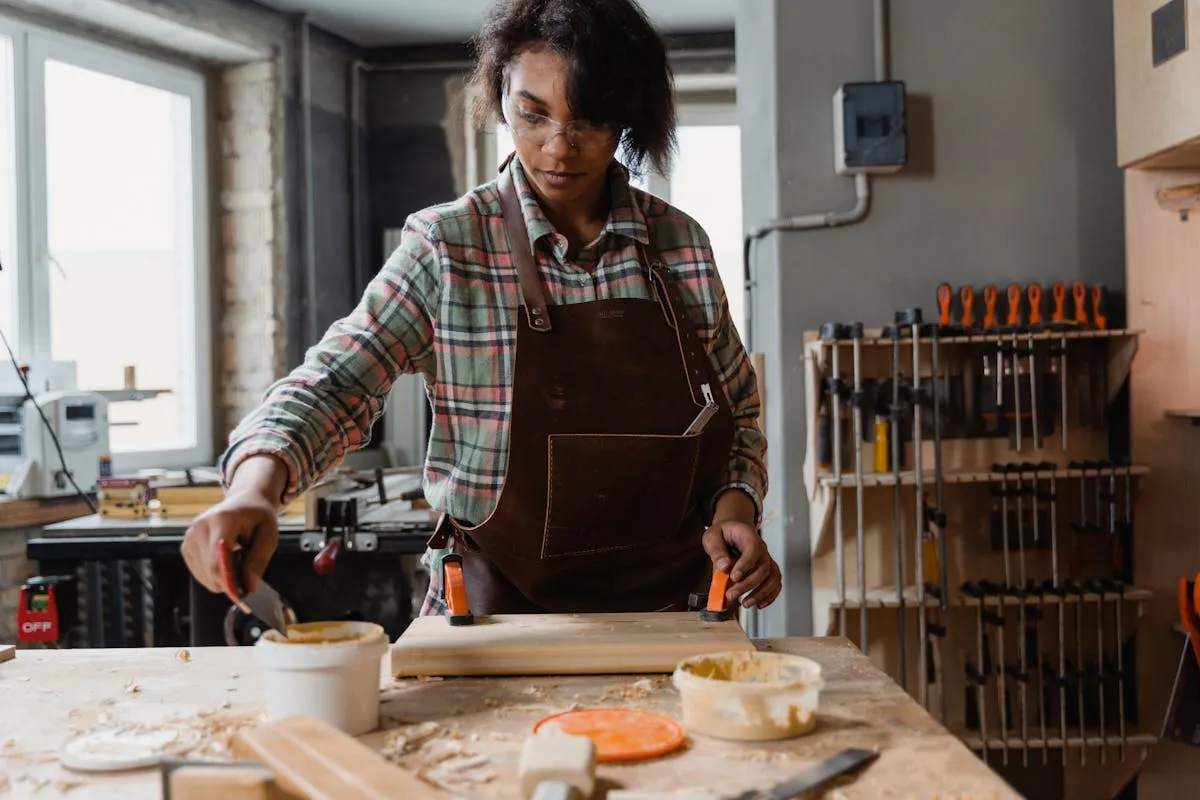
In a woodworking shop, glue is as important as the saw or the chisel. It is the chemical fastener that turns individual boards into a unified piece of furniture.
I often get asked, "Isn't it just glue?" The short answer is no. Depending on the species of wood, the specific joint, and where the piece will live, the choice of adhesive is a strategic technical decision. Using the wrong glue can lead to joint failure ("creep"), finish issues, or complete delamination years down the line.
PVA Glue: The Workhorse
Polyvinyl Acetate (PVA) is the standard yellow or white wood glue found in every shop. It’s incredibly strong, easy to clean up with water, and non-toxic. But even within PVA, there are varieties (commonly referred to by the Titebond numbering system):
- Type I (Original): The standard for interior furniture. It dries hard and has a fast set time. However, it is not water-resistant, making it a poor choice for outdoor furniture or cutting boards.
- Type II (Premium): Water-resistant. This passes the ANSI water-resistance test, meaning it can withstand occasional splashing. This is my go-to for dining tables and bathroom vanities.
- Type III (Ultimate): Waterproof. It has a longer open time (good for complex assemblies) and can actually be used outdoors. Why not use it for everything? It dries a darker brown, which can show glue lines on light woods like Maple or Ash.
Hide Glue: The Traditional Choice
There’s a reason organic hide glue was the standard for centuries before modern synthetics. It has unique properties that synthetics can't match.
First, it’s reversible. By applying heat and moisture, a joint can be disassembled. This is critical for musical instruments or complex antiques that may need repair 100 years from now. Second, it is self-lubricating, acting as a grease during complicated joinery fit-ups before it tacks. Finally, unlike PVA, hide glue doesn't block finishes. If you miss a spot of squeeze-out, the stain will often still penetrate properly.
Epoxy: The Gap Filler
PVA glue requires a tight fit—it actually loses strength if the gap is too wide. Epoxy is the opposite. It is structurally sound even in thick gaps.
I reach for epoxy when working with oily exotics (like Teak or Rosewood) that repel water-based glues, or when stabilizing a knot or crack in a slab table. It cures via a chemical reaction rather than evaporation, making it impervious to the humidity swings we see in Iowa.
CA Glue (Cyanoacrylate)
Commonly known as "Super Glue." In woodworking, we use this with an activator spray for instant bonding. It's too brittle for structural joints, but it's perfect for temporary jigs or for filling tiny hairline checks in a finish. It's the "emergency room" of the woodshop.
Pro Tip: Managing Squeeze-Out
The biggest enemy of a good finish is glue squeeze-out. If left to dry, it seals the wood fibers and prevents stain absorption, leaving ugly white spots.
There are two schools of thought on cleaning it:
- The Wet Wipe: Wiping immediately with a damp rag. This removes the bulk but can drive diluted glue into the pores—bad for staining.
- The Skin & Slice: Waiting 20-30 minutes until the glue becomes rubbery (skinned over), then slicing it off cleanly with a chisel. This is my preferred method for visible joints as it keeps the surrounding wood pristine.
At White Angus Woodworks, we take the science of adhesion seriously. We check expiration dates (yes, glue expires!), monitor shop temperature (glue won't bond below 50°F), and apply the perfect clamping pressure to ensure your project stays together forever.
Frequently Asked Questions
What is the strongest wood glue?
PVA wood glue (such as Titebond Original or Titebond II) creates a bond stronger than the wood fibers themselves when applied to tight-fitting long-grain joints. The glue joint will not be the point of failure—the wood around it will break first.
Can I use wood glue on end grain?
End grain absorbs glue like a sponge, starving the joint of adhesive and creating a weak bond. For end-grain joints, apply a thin sizing coat of diluted glue first, let it dry, then apply a full coat and clamp. Alternatively, use epoxy, which performs well on end grain without a sizing coat.
How long should wood glue dry before removing clamps?
Most PVA glues reach clamp strength in 30 to 60 minutes, but full cure takes 24 hours. Leave clamps on for at least one hour in a shop above 50°F. Do not stress the joint or machine the workpiece until after a full 24-hour cure.
Does wood glue expire?
Yes. Most PVA wood glues have a shelf life of one to two years from the date of manufacture. Expired glue becomes stringy, lumpy, or fails to bond properly. If the glue pours out in chunks or has a cottage-cheese texture, discard it.
How do I remove dried wood glue squeeze-out?
The best method is to wait 20 to 30 minutes until the glue skins over to a rubbery consistency, then slice it off with a sharp chisel. This keeps the surrounding wood clean. Avoid wiping wet glue with a damp rag on surfaces that will be stained, as diluted glue can be driven into the pores and block stain absorption.
Try It Yourself
Click on any cell to start solving. The clues update as you select different words.
Across
- 2 Standard yellow or white shop glue
- 4 Excess glue that escapes a joint
- 5 Two-part glue used for gap filling
Down
- 1 Property of glue that allows disassembly with heat
- 3 Traditional adhesive made from animals